
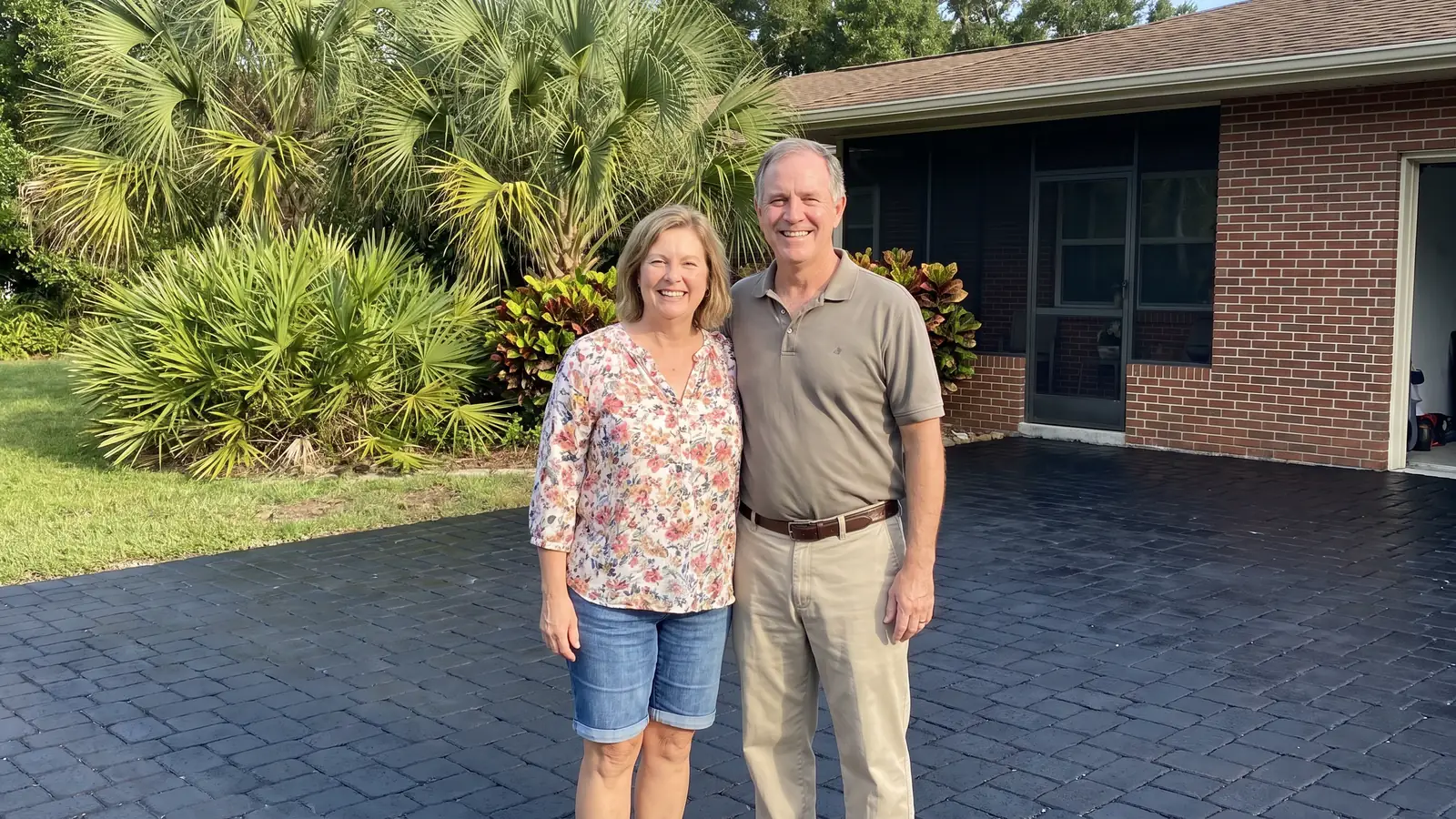
Paver sealing for Cedar Hills homes
Paver Sealing in Cedar Hills, FL
Ranch homes with wide front yards fill Cedar Hills, so call (904) 479-2177 for a free paver sealing estimate.
- Brings out deeper paver color
- Fresh joint sand helps lock pavers in place
- Gives weeds less room to grow
- Makes the surface easier to keep clean
- Free estimate, no obligation
Request a Free Estimate
Free, no obligation.
Fast, careful paver sealing in Cedar Hills
Paver sealing is available across Cedar Hills, from the ranch homes off Blanding Boulevard to the streets near Cedar Hills Park. A local contractor can wash and re-sand the pavers on walks, drives and patios, then seal them, and the estimate costs nothing. Phone (904) 479-2177 and expect an answer within 1 business day, quite often sooner.
Think of the patio outside your sliding glass doors, gone green at the edges, with weeds in the seams. Wash it, refill the joints and seal it, and it looks like the day it went in. To start with a note instead of a call, ask for a free estimate.
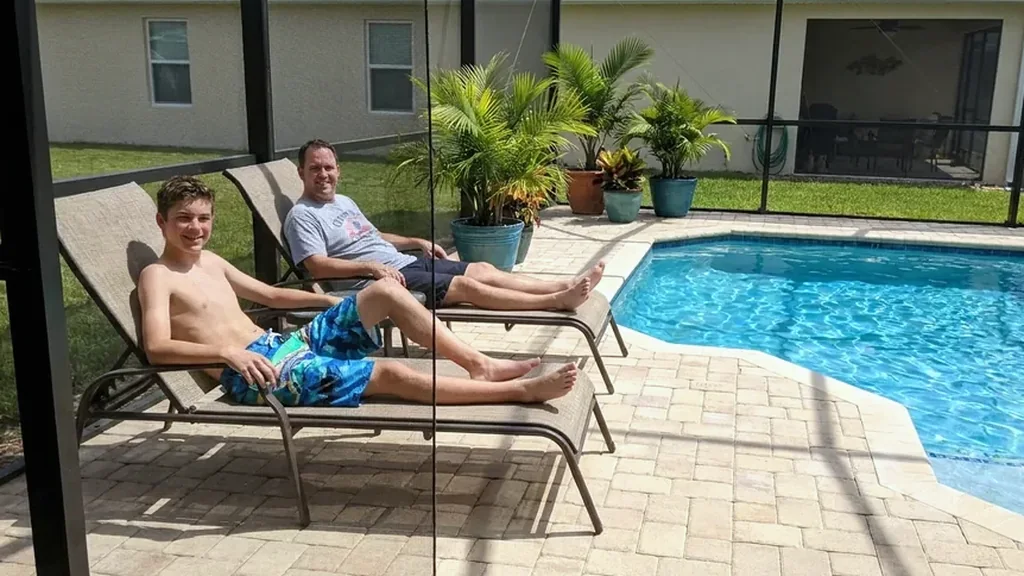
Why hire a local paver sealing contractor in Cedar Hills?
Cedar Hills ranch homes put pavers right at the front door and the back door, so wear shows fast. A local contractor knows how those low houses, wide front yards and ditches change a job, so ask for a free estimate and ask what that means for your yard.
Free walk-through
Someone looks over your front walk, drive and patio and names a price before any work is agreed.
A published range
The regional range is $1.75 to $3.25 per square foot. Compare each Cedar Hills quote with it.
Fit for a mid-century ranch
Matte suits a plain brick ranch, while a wet look adds shine but shows scuffs sooner.
Your call on timing
You pick the date and decide whether to proceed. A Cedar Hills estimate carries no obligation.
Get Your Free Estimate in Cedar Hills
Tell us about your pavers in Cedar Hills.
Free, no obligation
What paver problems show up most in Cedar Hills?
Ditches and canals beside the lot
Metro Jacksonville notes that Cedar Hills has a large network of drainage ditches and canals. Where lots drain toward a ditch, runoff can carry dirt and joint sand across the edge of a driveway or walk. That means the edge pavers are often the first to look worn and gappy. Ask the contractor to check the low side of the slab, since that is where trouble tends to start. Light brown stains at the edge can also come from soil carried by runoff. Over the years that can leave a gray band along the edge of the slab, which a good wash lifts out when the joints are sound.
Wide front yards, long front walks
Many Cedar Hills lots sit well back from the street behind a wide front yard. That gives many homes a long drive and a front walk that cross open lawn. Sprinklers hit that pavement every week, and sun hits it all day. Faded color and dull, chalky patches tend to show up in the full-sun stretches first. A few cracked or tilted pavers along the edge are a sign of washed bedding sand. A long walk across open lawn also shows every weed, so a clean, sanded, sealed surface changes the look of the whole front of the house.
Patios outside sliding doors
The ranch style that dominates this neighborhood has sliding glass doors that open to a patio. Owners later add pavers there, and a covered or shaded patio stays damp. Landscape trade notes link moss and algae on pavers to deep shade and constant damp. Expect green film at the roof edge and along the house wall. Trimming a shrub that blocks the sun can help the surface dry. Sealing a shaded patio without drying it first is how a white film forms, so these spaces often get scheduled on a bright day.
A 1950s house with pavers from other decades
About 3,000 homes went up in the 1940s and 1950s, and many have changed owners more than once. A paver patio added by an earlier owner may carry an old coat nobody remembers. A water-based product cannot follow a solvent-based one, so the contractor reads what is down before choosing. A thin coat that has gone yellow is another clue. If the old coat is peeling, flaking or has gone cloudy, it may need stripping, and that raises the price, so the early look matters.
Rust from irrigation
UF/IFAS says most Florida well water is high in iron and that orange stains often appear where such water is used for irrigation. If your Cedar Hills yard runs on a well, look for orange fans on walks near the sprinklers. Rust gets treated before sealing, since a coat would lock it in. Moving the spray heads off the pavement stops new marks. They show up in the same place after every watering, so you can often point the contractor straight to them.
What kinds of homes get paver sealing in Cedar Hills?
Mostly 1950s ranch homes. Metro Jacksonville says Cedar Hills was built in the 1940s and 1950s with about 3,000 single-family brick or concrete block homes in seven neighborhoods. Most are modest, and the style is the one-story American Ranch. Pavers here are usually a front walk, a drive or a patio, so call (904) 479-2177 and tell the contractor which you have.
Beside the Cedar River, a good number of homes were enlarged or rebuilt much bigger. Those bigger lots often have bigger paver areas, such as pool decks and motor courts. Inland, Sweetwater near Wilson Boulevard dates from the Sweetwater Park subdivision of 1949 to 1953. Tell the contractor your street when you ask for a free estimate.
The area also has streets named for storybook characters, such as Mother Goose Road and Peter Pan Place, and a 1959 aerial shows a grid with no cul-de-sacs. That grid means many homes sit on straight, open streets with room to park a wash rig. Call (904) 479-2177 to ask how your block would be handled.
What does paver sealing cost in Cedar Hills?
The price companies publish for a full wash, re-sand and seal in Northeast Florida is $1.75 to $3.25 per square foot. What you pay in Cedar Hills shifts with green film, empty joints and any old coat on the pavers. If the old coat has failed, stripping it adds to the bill. To see where your pavers fall, ask for a free estimate for a free estimate.
A front walk and a small patio cost more per foot than a long drive, because setup time stays the same on a small job. Ask what your quote includes, such as the washing steps, the joint sand and the number of coats of sealer. Call (904) 479-2177 with your measurements.
| Paved area | Typical example | Clean, sand and seal |
|---|---|---|
| 300 sq ft | Small patio or walkway | $525 to $975 |
| 600 sq ft | Two car driveway | $1,050 to $1,950 |
| 1,000 sq ft | Large driveway or pool deck | $1,750 to $3,250 |
| 1,500 sq ft | Driveway plus pool deck | $2,625 to $4,875 |
Math based on the $1.75 to $3.25 per square foot that Northeast Florida paver companies publish. Your contractor sets the actual price after seeing the surface. Repairs, leveling and stripping failed sealer are usually extra.
How does a paver sealing job work in Cedar Hills?
Start with the low side
The contractor begins by checking where water leaves your Cedar Hills pavers. Edges near a ditch or downspout get a close look. Sunken or lifted pavers are reset first, because sealer keeps any dip it covers. Mention any past sealer you remember. A few photos of the worst spots can help the visit go quickly. The contractor may probe the joints with a tool to see how deep the sand sits, and a few loose pavers are noted for the quote.
Wash the patio and the drive
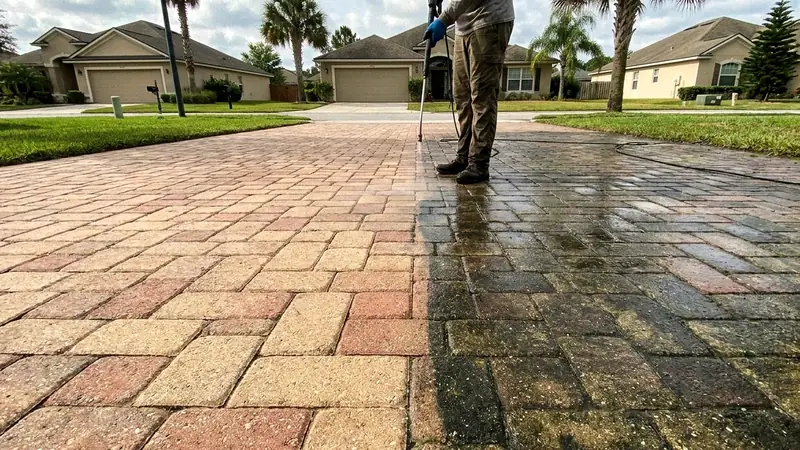
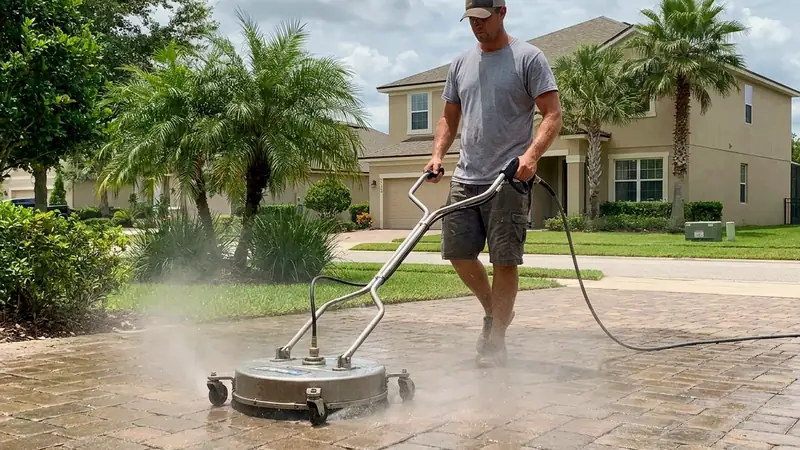
Cleaning clears green film, tire tracks and dirt. Rust gets its own treatment. Pressure is kept low and the spray wide, since hard washing can pull sand from the joints. Rinse water is steered away from the sliding doors and the shrubs along a ranch house. Shrubs, door tracks and window sills are covered or rinsed first. A soft brush and a low-pressure rinse handle the tight spots beside the slab where a wide spray would splash the siding. Brick ranch walls close to a patio get a covered edge before any spraying starts.
Refill every joint
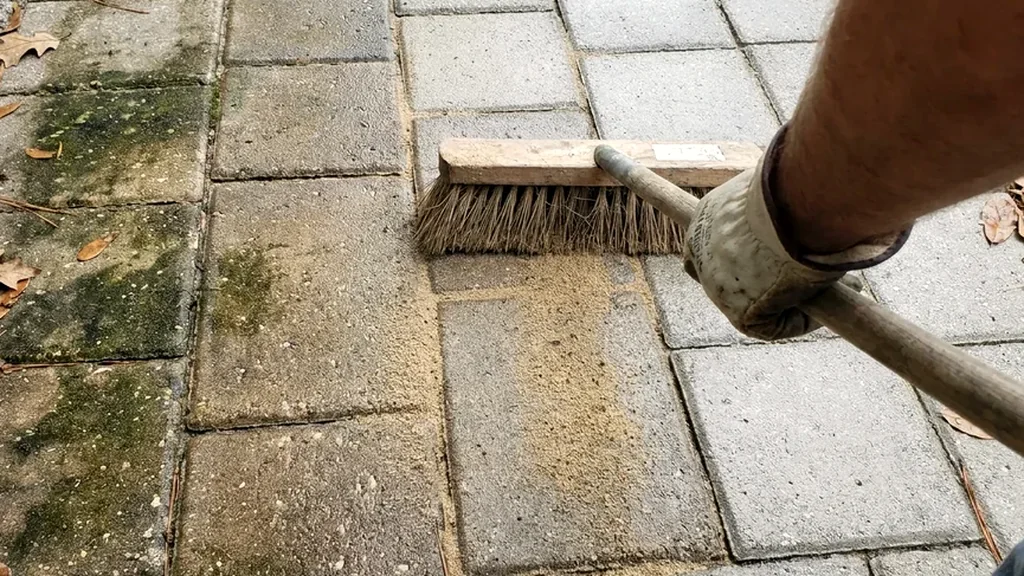
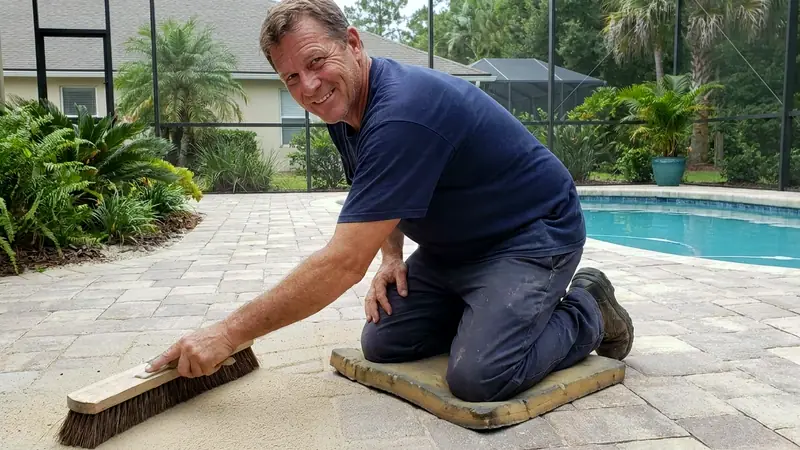
New sand is swept in after the wash so the joints are full again. Where the ground is sandy, soil drifts into open joints and weeds start. The contractor sweeps the face of the pavers clean so no sand is left under the coat. The sand is swept in more than once so the joints stay full after the first rain. Polymeric or plain paver sand is picked to suit the joint width, which is something to ask about during the visit.
Let it dry
The surface has to be dry before sealing. Rain here falls mostly in summer, and shaded patio corners dry slowly. If rain is close, the date moves. A coat over damp pavers can leave a white, cloudy look. Dew and shade can slow drying, even on a clear day. If a long dry spell is on the way, the job often moves up, since a clear forecast makes the whole day easier.
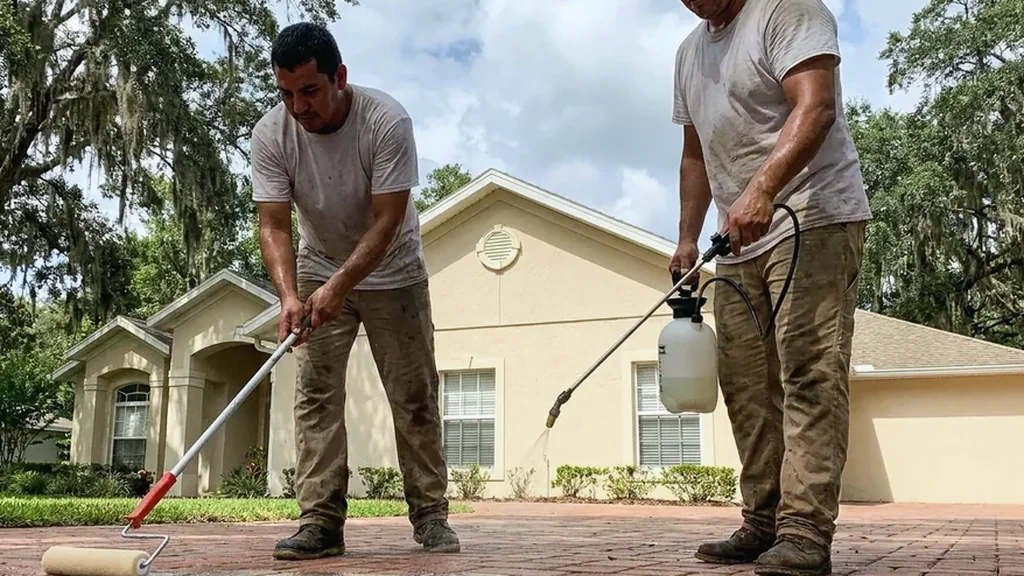
Apply the coat and keep off
Sealer is sprayed and rolled in, in the finish you chose. Expect foot traffic after a few hours and car traffic after about a day. Note the product and the date after the job, so the next coat matches. Keep pets, bikes and sprinklers off the surface until the contractor says it is safe. The finished surface should look even, with no puddled sealer in the joints, and any spot that looks off is fixed before the crew leaves.
Complete paver services in Cedar Hills
A Cedar Hills job moves from wash to sand to dry to seal. The order protects the result, since sealer must go over clean, full, dry joints. A front walk can be done fast, while a large drive takes longer. To ask how long your layout would take, call (904) 479-2177.
Front walks and drives take the sun, and patios by the back door take furniture and wet feet. Pool decks on riverside lots add chlorine to the list. Each surface wears in its own way. When you ask for a free estimate, list the surfaces you have, and the plan will fit them.
Sealers come in water-based and solvent-based types, and a wet look shows scuffs sooner than matte. On a plain brick ranch, matte often looks right. An old solvent coat blocks a water-based one. Ask which product is going down, then call (904) 479-2177 if you want help choosing.
Jacksonville gets about 53 inches of rain in an average year, with the biggest rise in summer and autumn. Summer highs stay near 91 degrees. A hot, dry week helps sealer cure. To find a good window for your Cedar Hills drive, ask for a free estimate.
Questions to ask before you hire
- Who do I call if a patch looks uneven after the job?
- Will the sealed surface stay grippy when it is wet?
- Can you remove the white powder that keeps coming up on my pavers?
- Do I need to move the grill and chairs, or will you?
- Will the price change if you find loose or sunken pavers once you start?
- Do you charge more for steps, curved borders and pool coping?
- Can you show me a finished driveway before I sign anything?
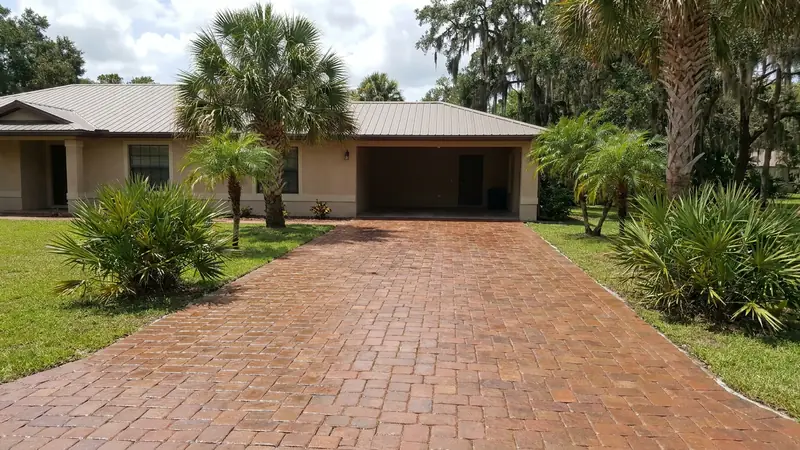
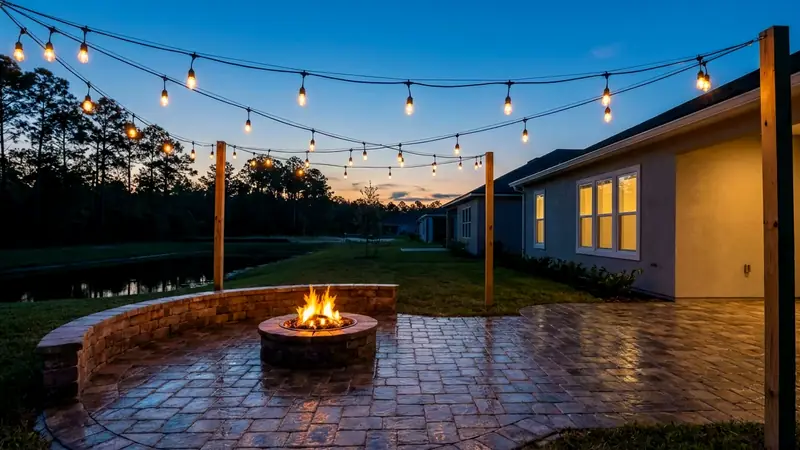
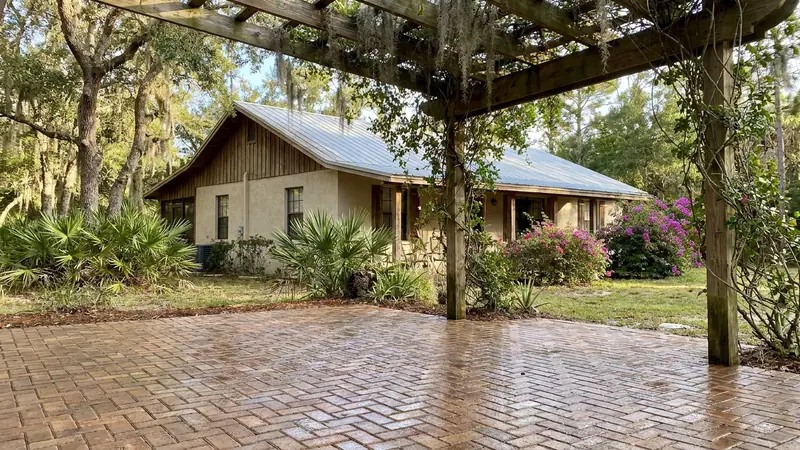
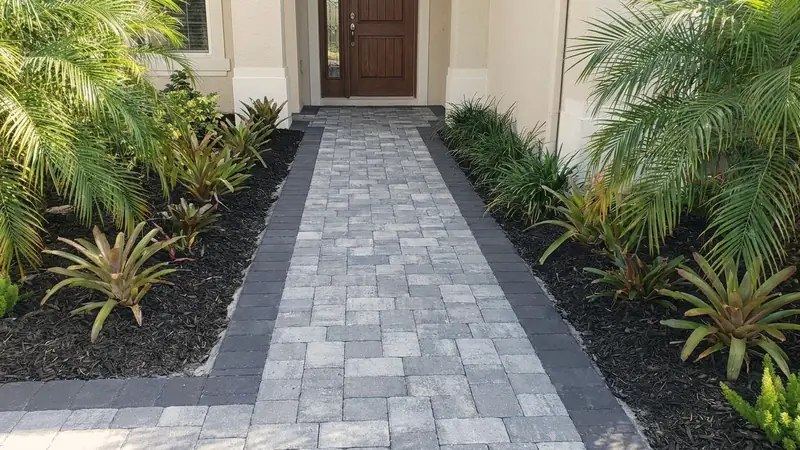
What do sealed pavers look like around Cedar Hills?
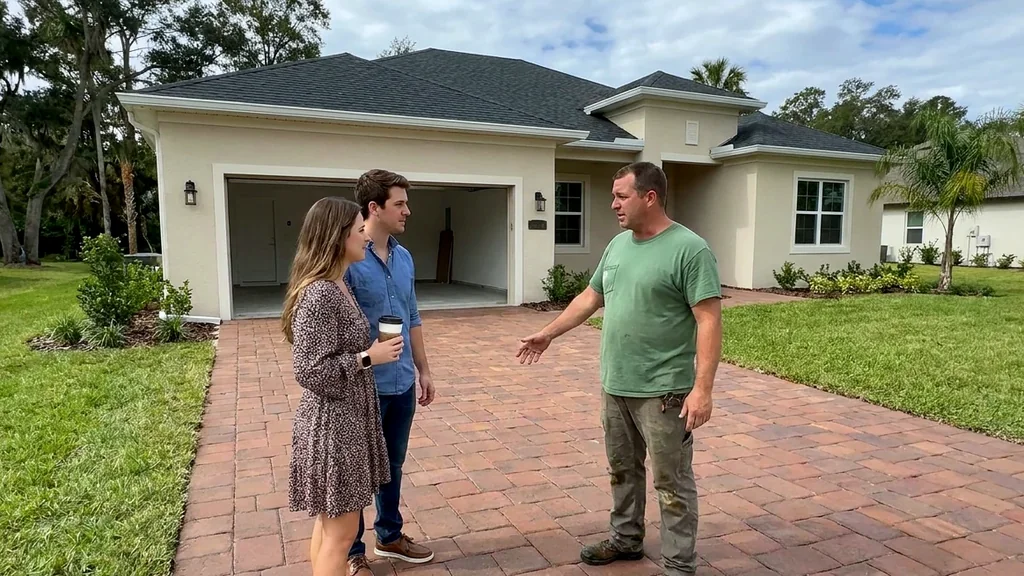
Why local matters in Cedar Hills
A contractor who works Cedar Hills knows the ranch homes and how pavers sit beside them. Patios outside sliding doors, drives across wide front lawns and edges along ditches are common here. That saves guesswork at the estimate. To reach someone who works this part of the Westside, call (904) 479-2177.
Riverside lots also differ from inland streets, and local crews know it. Homes near the Cedar River are often larger, with bigger deck and drive areas. Inland, lots are modest and walks are short. Either way, ask for a free estimate and note your street so the quote fits.
A local contractor also knows the area's age. With so many houses from the 1950s, older pavers and old coats are likely. The contractor can read what is on the surface and say what it needs. Photos of the patio and the front walk help when you call (904) 479-2177, and asking costs nothing.
What is Cedar Hills known for besides its ranch homes?
Cedar Hills Shopping Center opened in 1955 at 282,000 square feet, one of Jacksonville's first large shopping districts outside Downtown. Anchor Plaza arrived on 103rd Street in 1970. Cedar Hills Elementary has served the area since 1956, and the Mary Lena Gibbs Community Center is the former National Guard Armory from 1957. If you live near those, ask for a free estimate.
Cedar Hills Park has a public pool and a pedestrian bridge from nearby backyards, and the Cedar River is popular with weekend anglers. Sweetwater, settled by freed slaves after the Civil War, sits inside the area near Wilson Boulevard. If your street is close to one of these spots, call (904) 479-2177 and say which.
Frequently Asked Questions
Is it good to seal pavers in Florida?
Yes, in most cases. Sealer keeps joint sand in place and helps oil and dirt stay on top instead of soaking in. Summer highs near 91 degrees and heavy summer rain wear on pavers around Cedar Hills ranch homes. Plan to renew the coat every few years.
How long do paver sealers last in Cedar Hills?
Expect roughly two to five years from one coat to the next, going by typical quotes. Full sun on a front drive shortens that span, and a shaded patio stretches it. Water that soaks in instead of beading is your sign.
How much does it cost to have pavers cleaned and sealed in Cedar Hills?
The published Northeast Florida range is $1.75 to $3.25 per square foot, so start there. A small front walk can cost more per foot than a long drive. Have the square footage written on the quote, then compare bids. Have the square footage written on the quote, then compare bids.
Why is paver sealing so expensive?
The price is mostly labor. Prep hours pile up before the first drop of sealer lands, and a failed old coat has to be stripped on top of that. A short front walk costs more per foot than a big drive.
Do Cedar Hills drainage ditches affect my pavers?
They can. Metro Jacksonville says the neighborhood has a large network of ditches and canals. Where lots drain toward them, runoff can carry sand out of edge joints. A contractor checks the low side of your drive or walk first. The low side is where sand is lost first.
Can I seal a patio outside my sliding doors?
Yes, as long as it is clean, full of sand and dry. Shaded patios stay damp longer and grow green film, so they may need extra wash time. The contractor also protects the door track and the house wall from overspray. Bring up anything you want covered.
What happens to sealer if it rains after the job?
Fresh sealer needs dry weather to cure. A Surebond bulletin asks for 24 hours of dry weather after application. A contractor watches the forecast and moves the date rather than risk a cloudy coat. Ask what the plan is for a rainy week.
What if a paver near my Cedar Hills ditch has sunk?
It gets reset before sealing. Runoff heading toward a ditch can carry sand out from under edge pavers. The contractor lifts the paver, refills the base sand and sets it level so the coat does not lock in the dip.
How do I know a Cedar Hills driveway needs sealing again?
Watch how water behaves. One Jacksonville company says water that beads means the sealer still works, and water that soaks in and darkens the paver means it is done. Faded color and empty joints are other signs. Ask the contractor to test a small spot.
Does sealing keep weeds out of the joints?
It helps. A paver company in the region says sealer steadies joint sand, so less washes out and fewer weeds root. Landscape guidance says lost sand widens joints and lets soil in, so the joints are refilled before sealing. Answers like this come after a look at your surface.
Can pavers next to a brick ranch house be sealed safely?
Yes. The contractor protects brick, door tracks and shrubs from overspray and keeps rinse water off the house wall. Tell the contractor about any painted trim or window units near the pavers when you book. Say so when you book.
Nearby areas we serve
Ready for a Free Estimate in Cedar Hills?
Call (904) 479-2177 and tell us about your pavers.
Free, no obligation